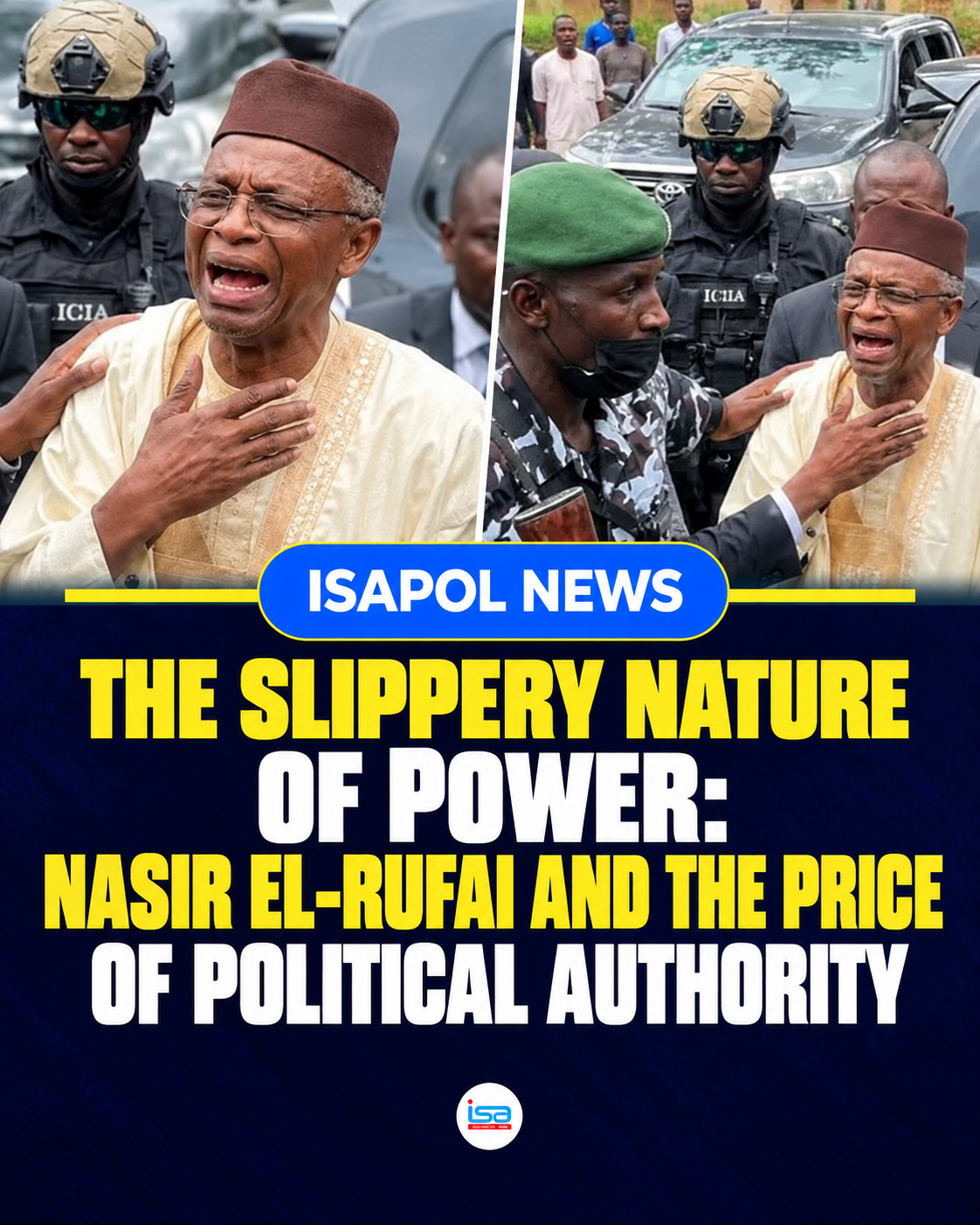
THE SLIPPERY NATURE OF POWER: NASIR EL-RUFAI AND THE PRICE OF POLITICAL AUTHORITY

Written by: OPARA VICTOR
Power is temporary. Authority is borrowed. And no political throne lasts forever.
Yesterday, Nasir El-Rufai stood among Nigeria’s most influential political figures. Today, the controversies surrounding his political journey raise a familiar question: what happens when a man who once wielded enormous power must answer questions about his own record?
During his tenure as governor of Kaduna State from 2015 to 2023, El-Rufai became a prominent and often controversial figure in Nigerian politics. His policies, public statements, and handling of security and religious tensions attracted both supporters and fierce critics.
The killings in Southern Kaduna, the deadly confrontations involving members of the Islamic Movement in Nigeria, and questions about government accountability remain significant parts of the debate surrounding his administration.
For many critics, these events represent unresolved questions about leadership, human rights, and the responsibility of those entrusted with public power. Others have defended aspects of his record and leadership. Ultimately, public judgment must be informed by evidence, not merely political sentiment.
But there is a broader lesson here.
The greatest mistake a leader can make is to confuse the authority of an office with personal invincibility.
Political influence can command attention, silence some critics, and open doors that ordinary citizens cannot access. Yet political power changes hands, alliances shift, and yesterday’s allies may become tomorrow’s opponents.
When allegations arise, accountability should follow established legal procedures. No public official should be presumed guilty without evidence, and no public official should be above legitimate investigation.
That is the true test of a democracy: whether institutions can hold the powerful and the powerless to the same standards of justice.
The Yoruba proverb “Ẹ̀san kì í gbàgbé ẹni” is often understood as a reminder that wrongdoing does not simply disappear. But beyond vengeance, the greater principle is accountability: every leader should be prepared to answer for decisions made while exercising public authority.
Let those in power remember this: the people you dismiss today deserve the same dignity as those whose approval you seek tomorrow. The rights you fail to protect today may become the very rights you desperately need protected in the future.
Power without accountability threatens democracy. Authority without humility breeds resentment. And leadership without responsibility leaves questions that time alone cannot erase.
God reigns. Power belongs to God.
The lesson is simple: serve with humility when you have power, act with responsibility when you exercise authority, and remember that no political position is permanent.
#TheSlipperyNatureOfPower #NasirElRufai #Nigeria #PoliticalCommentary #Accountability #Leadership #Democracy #FacebookReels
Copied