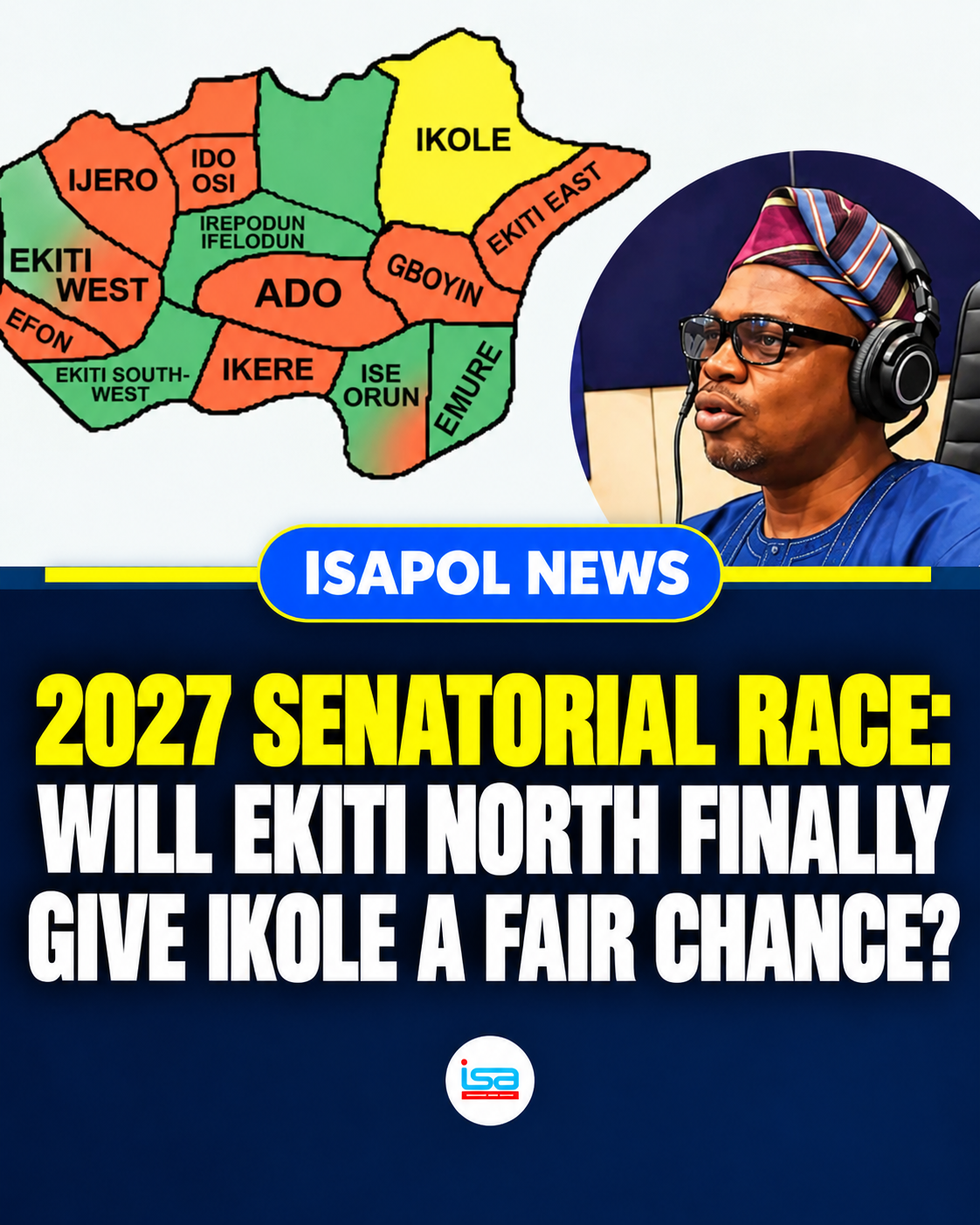
2027 SENATORIAL RACE: WILL EKITI NORTH FINALLY GIVE IKOLE A FAIR CHANCE?

As the political atmosphere ahead of the 2027 general elections continues to build across Ekiti State, one question remains central to conversations about Ekiti North Senatorial District: will Ikole Local Government finally receive a fair opportunity to produce a senator?
The question has continued to attract attention from political stakeholders who believe that fairness, inclusion and balanced representation should play important roles in determining the district’s political future.
Ekiti North comprises five local government areas: Ikole, Oye, Ido Osi, Moba and Ilejemeje. Although the district shares one senatorial seat, the history of who has occupied that seat has generated concerns about whether every area has enjoyed a meaningful opportunity to contribute to senatorial leadership.
Since Nigeria returned to democratic rule in 1999, Ikole has not produced a senator. Senator Ayo Arise, who represented Ekiti North from 2007 to 2011, came from Oye. This history has strengthened calls among some stakeholders for Ikole to receive serious consideration as the district prepares for another electoral contest.
For supporters of the Ikole aspiration, the issue is not about excluding other communities or undermining qualified aspirants. It is about recognising a longstanding concern and ensuring that the political process offers every part of the district a fair opportunity to compete.
They argue that inclusive representation can strengthen unity across Ekiti North and encourage wider participation in the democratic process. When communities believe their aspirations are being heard, confidence in political institutions can grow.
However, the demand for fairness must go hand in hand with the search for capable leadership. The next senator should be someone with the knowledge, integrity and commitment to advance the interests of all five local government areas through effective legislation, responsible oversight and consistent engagement with constituents.
The 2027 process therefore presents political parties and stakeholders with an opportunity to encourage open consultations, transparent candidate selection and meaningful participation by qualified aspirants. Historical representation deserves consideration, while the democratic process must remain credible and voters must retain the final choice.
Ikole’s demand is clear: an opportunity to present credible leadership and a fair hearing in the contest for the senatorial seat. Whether that aspiration succeeds will depend on political decisions, party processes and the choices made by the electorate.
As Ekiti North looks towards 2027, the conversation should be guided by fairness rather than division, inclusion rather than exclusion, and competence rather than political convenience.
The question is no longer whether Ikole’s aspiration deserves discussion. The real challenge is how stakeholders can address it fairly while protecting the democratic interests of the entire district.
PUBLISHED BY: ISAPOL CONSULTANCY INFORMATION COMMUNICATION FIRM