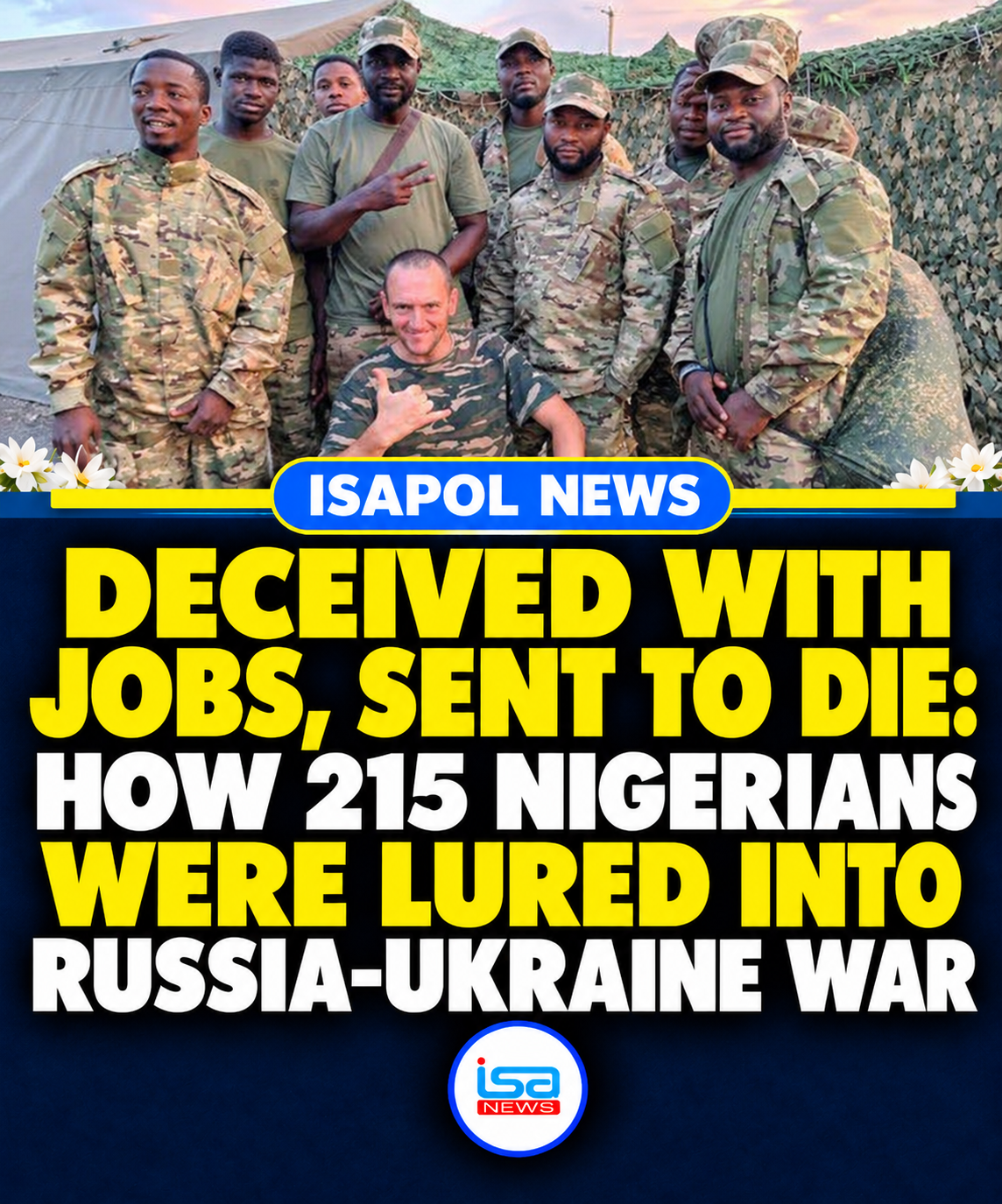
DECEIVED WITH JOBS, SENT TO DIE: HOW 215 NIGERIANS WERE LURED INTO RUSSIA-UKRAINE WAR

At least *215 Nigerians* have been recruited into the Russian armed forces to fight against Ukraine, with *25 confirmed dead or missing*, according to a Ukrainian government-linked agency monitoring foreign recruitment.
The figures place *Nigeria fifth in Africa* for Russian recruitment, behind Cameroon, Ghana, Egypt and Kenya, according to *StopRussianRecruiters.org*, an initiative partly run by Ukraine’s Ministry of Foreign Affairs and Defence Intelligence (DIU).
The agency said figures were compiled from local media reports and investigations by Channels TV and Punch Newspapers.
*How They Are Lured:*
Ukrainian intelligence says recruits are targeted via fake job ads on *Facebook and WhatsApp* promising security jobs, driving, logistics and technical jobs in Russia.
Victims are issued visas and one-way tickets to Moscow. On arrival, their passports are allegedly confiscated under the guise of processing paperwork. They are then left stranded, broke, and given a choice: deportation with debt, imprisonment, or signing a military contract with the Russian Ministry of Defence they often don’t understand due to language barrier.
After about one week of training, they are sent to the front.
*Nigerians Killed:*
Among those named is *Ayebusiwa Olabode Victor*, 34, a former Nigerian Navy officer from Ondo State, who signed a contract in February 2026, just one week after Nigeria’s Ministry of Foreign Affairs warned against recruitment. He was reportedly killed near Hrafske, Kharkiv region in May 2026.
Others include Hamzat Kolawole and Mbah Udoka reportedly killed in Luhansk, and Matthew Sunday Bankole, 37, currently held in Ukrainian POW camp.
Russia’s Ambassador to Nigeria, Andrey Podyelyshev, has denied state involvement, saying “If some illegal individuals are trying to recruit Nigerians to fight in Ukraine, this is not connected with the Russian state.”
The Federal Government has repeatedly warned Nigerians not to join foreign armed conflicts.
Published by isapol Consultancy information communication firm