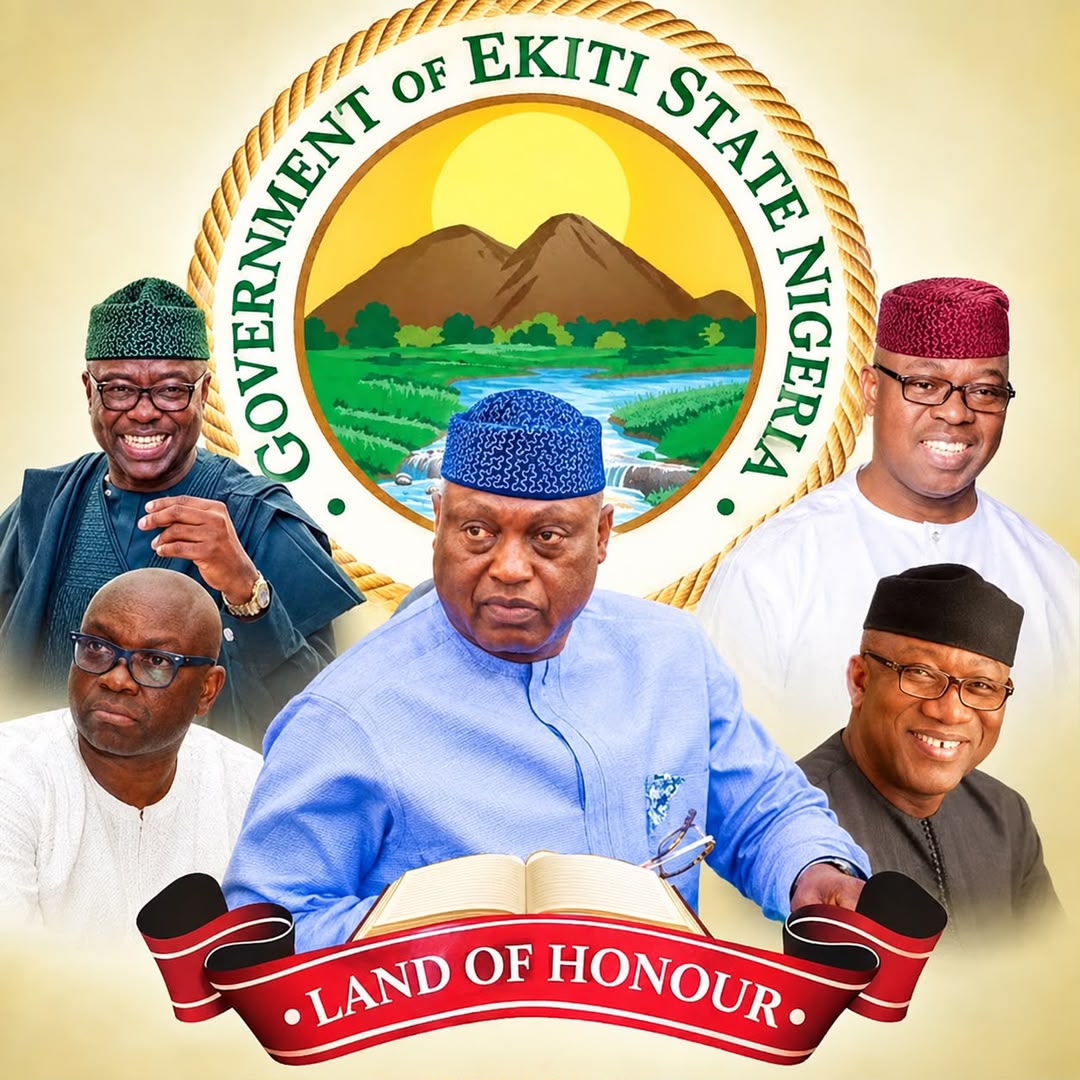
EKITI AT 30: THREE DECADES OF PROGRESS, PERSEVERANCE AND PROMISE

Thirty years after its creation on 1 October 1996, Ekiti State stands at an important milestone in its history. From its early years to the present day, the state has experienced different administrations, policies and development priorities, all contributing in one way or another to the evolution of Ekiti.
Today, Ekiti has 16 Local Government Areas and 22 Local Council Development Areas, with a growing identity built around education, public service, agriculture, culture, community values and human capital development.
Since 1996, the state has been administered by military administrators as well as elected governors, including Chief Adeniyi Adebayo, Chief Ayodele Fayose, Chief Segun Oni, Dr Kayode Fayemi and, since October 2022, Governor Biodun Oyebanji.
Each administration has faced its own realities and contributed to the continuing development of the state. At the same time, Ekiti has had to contend with challenges common to many parts of Nigeria, including infrastructure deficits, unemployment, electricity challenges, rural development needs, limited industrialisation and pressure on public resources.
THE OYEBANJI YEARS AND THE DRIVE FOR DEVELOPMENT
Governor Biodun Abayomi Oyebanji assumed office in October 2022 with a development agenda focusing on youth development and job creation, human capital development, agriculture and rural development, infrastructure and industrialisation, arts, culture and tourism, as well as good governance.
One of the visible areas of government activity has been infrastructure. Several roads across the state have undergone construction or rehabilitation, including the Ikere–Igbara-Odo and Ado–Iworoko–Ifaki corridors, alongside other urban and rural roads.
The Ekiti Agro-Allied International Cargo Airport has also become operational, while projects such as the Ekiti Ring Road and Ekiti Knowledge Zone have remained part of the administration’s broader economic and infrastructure agenda.
In education, the government has reported the recruitment of more than 2,000 teachers, interventions in public schools and the continuation of free education from primary to senior secondary school, including support for WAEC fees.
Healthcare has equally received attention through the renovation, upgrading and equipping of health facilities, including primary healthcare centres and hospitals. Government-reported health statistics indicate improvements in some key maternal and child-health indicators, although such figures should continue to be assessed alongside independent data.
Agriculture and youth employment have also featured prominently. Government initiatives have sought to encourage young people into commercial agriculture, support small and medium-sized businesses and create opportunities for economic participation across the state.
BUILDING INSTITUTIONS FOR THE FUTURE
Beyond physical projects, governance and institutional reforms have become another part of Ekiti’s development conversation.
The state government has highlighted initiatives around budget transparency, e-procurement, public reporting and other administrative reforms, alongside legislative changes introduced in 2026 concerning areas such as local-government administration and criminal justice.
These efforts point to the importance of building institutions that can sustain development beyond individual administrations.
THIRTY YEARS: CELEBRATION AND REFLECTION
As Ekiti marks 30 years, it is important to acknowledge both the progress achieved and the work that remains.
Residents have expressed appreciation for developments in areas such as roads, healthcare and agriculture, while concerns remain around unemployment, the cost of living, electricity, security and uneven development, particularly in some rural communities.
The story of Ekiti at 30 should therefore be viewed as a continuing journey rather than a finished project.
Every administration has contributed a chapter to the state’s history. The present administration under Governor Biodun Oyebanji is building on foundations laid by previous governments while pursuing its own priorities in infrastructure, education, healthcare, agriculture, youth empowerment, economic development and governance.
THE ROAD AHEAD
Thirty years is a milestone, but it is certainly not the destination.
The next chapter of Ekiti’s history presents an opportunity to consolidate the gains already made, address existing challenges and create stronger opportunities for young people, businesses, farmers, professionals and communities across the state.
The future of Ekiti depends on continuity, responsible leadership, accountability, investment and the collective participation of its citizens.
After three decades, the message remains clear: Ekiti has come a long way, and there is still much more to accomplish.
As the state celebrates its 30th anniversary, may the coming decades bring greater prosperity, unity, peace and opportunity to every Ekiti citizen at home and in the diaspora.
LONG LIVE EKITI STATE!
LONG LIVE THE FEDERAL REPUBLIC OF NIGERIA!
Published by:
Isa Pol Consultancy Information and Communication Firm