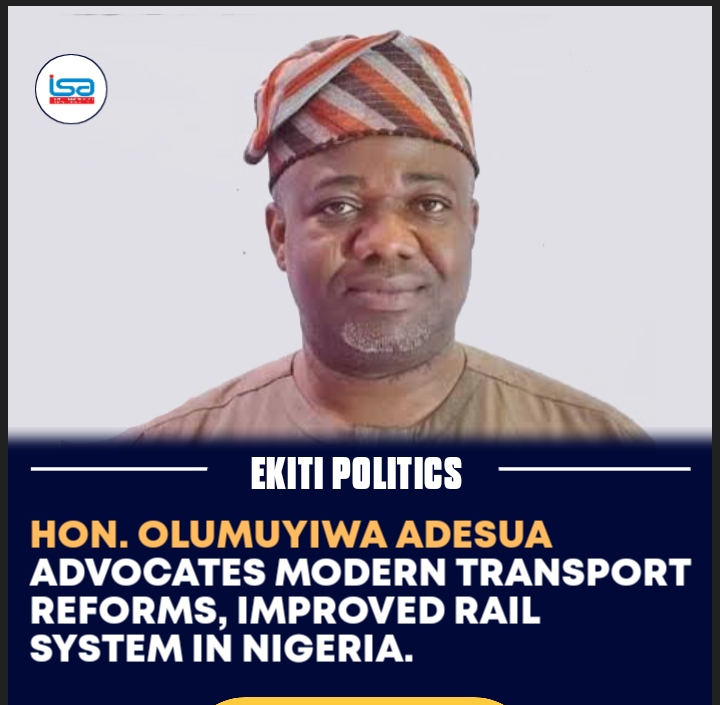
Hon. Olumuyiwa Adesua Advocates Modern Transport Reforms, Improved Rail System in Nigeria.

Hon. Olumuyiwa Adesua, the Deputy Chairman of the United Kingdom Chapter of the All Progressives Congress (APC), has continued to lend his voice to the growing national conversation on infrastructure development, transportation reforms, and the urgent need to modernize Nigeria’s rail and road systems.
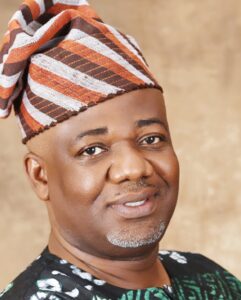
Born in Ekiti State, Hon. Adesua is a seasoned transportation professional with over three decades of practical experience in the transport sector in the United Kingdom. His wealth of international exposure, technical understanding, and administrative insight has positioned him as a respected voice on issues concerning mobility, infrastructure planning, and public transport efficiency.
Recently, Hon. Adesua was part of the APC delegation from the United Kingdom that visited the Lagos-Calabar Coastal Road Project, one of the most ambitious infrastructure projects currently being undertaken in Nigeria. The visit offered him and other members of the delegation the opportunity to assess the scale, significance, and long-term economic potential of the road project, while also engaging in broader discussions on transportation development across the country.
Speaking after the inspection, Hon. Adesua described the Lagos-Calabar Coastal Road as a strategic national asset capable of transforming economic activities, boosting tourism, easing interstate connectivity, and opening up new investment corridors along Nigeria’s coastal belt. According to him, such projects are not merely about road construction, but about creating a foundation for sustainable national growth and regional integration.
He noted that transportation remains one of the strongest pillars of economic development, stressing that no nation can attain meaningful industrial growth, urban efficiency, or social mobility without investing heavily in modern and integrated transport infrastructure.
Need for a Functional and Modern Rail System
Beyond roads, Hon. Adesua emphasized the need for serious investment in Nigeria’s rail system, describing rail transportation as one of the most effective and sustainable ways to move people and goods across a large and growing country like Nigeria.
Drawing from his extensive experience in the United Kingdom, he explained that an efficient rail network helps to reduce pressure on highways, lower transportation costs, minimize traffic congestion, improve environmental sustainability, and stimulate commercial activities between cities and regions.
According to him, Nigeria must move beyond fragmented transportation planning and begin to embrace a coordinated, long-term rail development strategy that links major cities, commercial centers, seaports, airports, and industrial hubs.
He stated that for Nigeria’s rail system to become truly effective, government at all levels must focus on:
Expanding rail lines to cover more parts of the country
Modernizing existing rail infrastructure
Ensuring regular maintenance and operational efficiency
Encouraging private sector participation and investment
Integrating rail transport with road, maritime, and air transport systems
Promoting affordability and accessibility for ordinary Nigerians
Lessons Nigeria Can Learn from the United Kingdom
Hon. Adesua also pointed out that there are valuable lessons Nigeria can learn from advanced transport systems such as that of the United Kingdom, especially in the areas of transport regulation, safety standards, time management, ticketing systems, commuter convenience, and infrastructure maintenance.
He explained that one of the strengths of the UK transport model lies in its structured planning, strict enforcement, and consistent investment in maintenance and upgrades. In his view, Nigeria must begin to prioritize not only the construction of new infrastructure but also the management, sustainability, and effective utilization of existing transport assets.
He further advised that transportation policy in Nigeria should not be driven by politics alone, but by professional expertise, data, long-term planning, and public interest.
A Call for Visionary Leadership in Infrastructure Development
Hon. Adesua praised the current momentum around infrastructure renewal in Nigeria and urged political leaders, policymakers, and stakeholders to remain committed to projects that have the capacity to positively impact millions of Nigerians.
He stressed that transport development must be seen as a national priority, not just a sectoral concern, because of its direct connection to commerce, education, health, tourism, employment, and national productivity.
He maintained that if properly managed, Nigeria has the potential to build a transport system that can compete favorably with those of more developed nations, while also meeting the unique demands of its population and economy.
Conclusion
As a proud son of Ekiti State, a committed APC chieftain, and a transportation expert with decades of international experience, Hon. Olumuyiwa Adesua brings both perspective and practical insight to the ongoing discourse on Nigeria’s infrastructure future.
His contributions following the APC UK delegation’s visit to the Lagos-Calabar Coastal Road have once again highlighted the importance of visionary planning, efficient transport systems, and modern rail development as key drivers of national transformation.
For Hon. Adesua, the message is clear: Nigeria’s journey to economic greatness must be powered by a transportation system that is modern, reliable, integrated, and built to serve the people.
Comrade Idowu Afuye
CEO, ISAPOL CONSULTANCY INFORMATION COMMUNICATION FIRM.