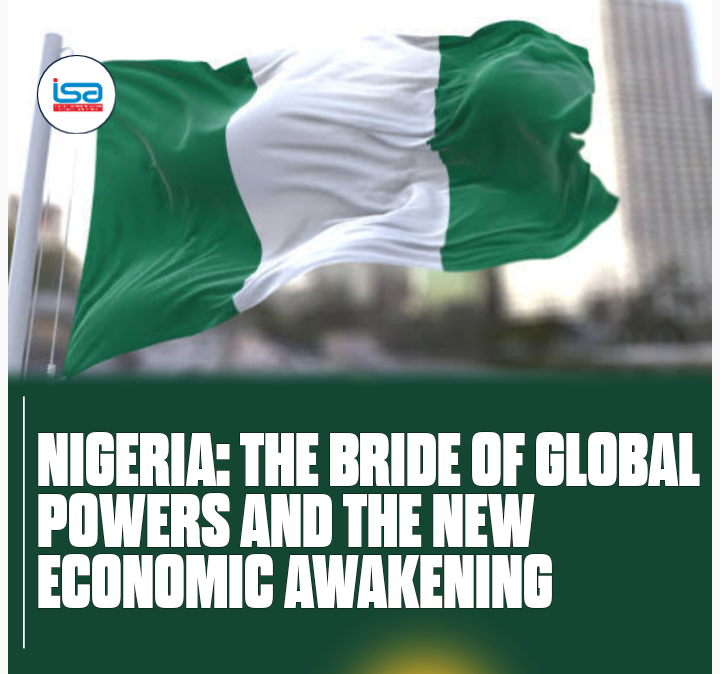
Nigeria: The Bride of Global Powers and the New Economic Awakening


Recently, the United States, under the leadership of Donald Trump, declared its renewed interest in combating jihadists and insurgent groups responsible for the killing of Christians in Nigeria. This development has, understandably, sparked conversations and speculations across political, diplomatic, and social circles.
However, from the standpoint of global diplomacy and strategic relations, it is important to view this not through the lens of panic, but of perspective. Nigeria is not just another African country; Nigeria is a country of interest to world powers — a nation richly blessed in both human and natural resources.
I have often said it, openly and without hesitation: Nigeria is a blessed nation. Of course, not without its challenges, but beyond those challenges lies a depth of strength, resilience, and strategic importance that continues to make Nigeria the “bride” courted by the world’s economic giants.
China’s growing footprint in Nigeria is evident. The European Union maintains its presence and interests here. The United States, as we see, is watching closely — and not from a distance. These nations recognize Nigeria’s potential, not only as an economic hub but as a stabilizing force in Africa’s political and developmental trajectory.
That said, Nigeria remains a sovereign nation. And for any form of intervention, invasion, or foreign military involvement to occur, the established avenues of diplomatic discourse would have been explored to their fullest. I do not foresee any of the current speculations or so-called “threats” materializing into direct interference with our sovereignty.
However, what many fail to recognize is that Nigeria, for the first time in a long while, is undergoing bold and painful but necessary economic re-engineering. These steps — from subsidy removal to oil sector reforms, to the Naira’s recent strength against the dollar — are not without internal contention. Naturally, such structural shifts will shake internal power balances and, externally, attract global attention.
Oil, for instance, has been both a blessing and a battlefield in global politics. Wars have been waged, regimes have fallen, and economies have been rewritten over oil. Nigeria’s evolving oil policies and fiscal reforms are, therefore, not isolated economic decisions — they have geopolitical reverberations.
Add to this the quiet reemergence of regional governance dynamics, local government autonomy reforms, and fiscal accountability measures — and what you see is a nation retooling itself for a new economic order.
Now, here’s what I think is truly happening: this is not a salvation army marching toward Nigeria. This is, instead, a “big brother” conversation — a signal from a world power to a rising power-in-the-making, saying: “Let’s talk. Why are you not talking to me?”
Those familiar with diplomatic language will understand this tone. It is not about conflict; it’s about control, alignment, and influence. Nations with interests in Nigeria want to understand — and, perhaps, shape — where this new direction is heading.
But while we watch these developments unfold, my counsel is simple: let’s do less speculation and more studying. Let’s read, research, and understand the broader geopolitical chessboard. The less we panic, the better positioned we are to engage meaningfully as informed citizens.
Nigeria is on the cusp of something profound. And as global powers realign around our economy, our policies, and our resources, one truth remains: everyone wants a slice of what Nigeria carries.
So, rather than complain or fear, let’s appreciate what we have. The world sees it — perhaps more than we do. After all, no one seeks to invade a nation of no value. The very attention Nigeria commands today is proof of her importance, her wealth, and her inevitable rise.
©️AY Nigeria ™️
https://aynigeria.org