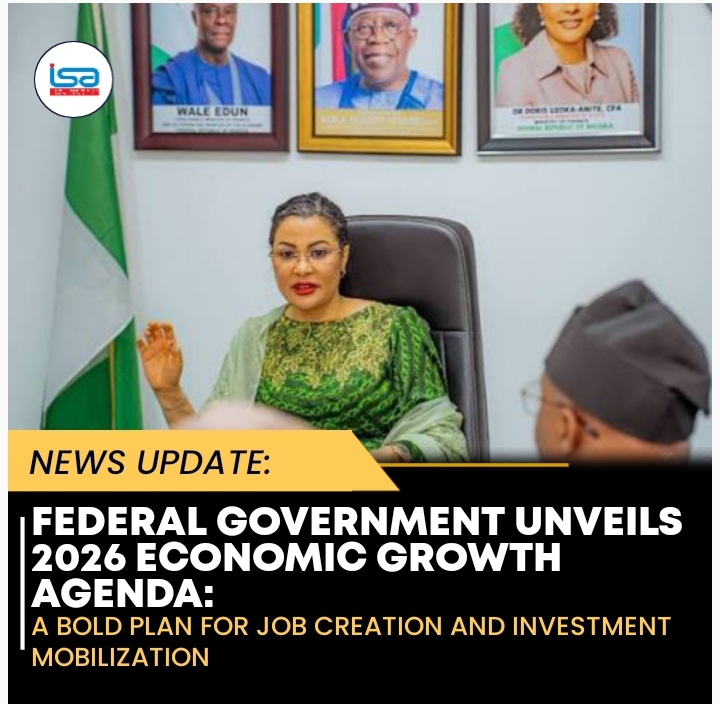
Federal Government Unveils 2026 Economic Growth Agenda: A Bold Plan for Job Creation and Investment Mobilization


In a strategic move aimed at stimulating economic growth, the Federal Government of Nigeria has announced an extensive set of policies and priorities for 2026. This initiative is designed to accelerate job creation and attract significant investments as the nation transitions into a new phase of economic expansion.
Strategic Priorities for Economic Growth
The government’s plan, articulated by the Minister of State for Finance, Dr. Doris Uzoka-Anite, emphasizes the need for enhanced stability, increased productivity, and robust investment from both domestic and foreign sources. This initiative is part of Nigeria’s ambition to achieve a $1 trillion Gross Domestic Product (GDP) by 2036—a mark seen as critical for long-term economic sustainability.
The administration’s strategy for 2026 represents a pivotal shift from a focus on stabilisation to one aimed decisively at growth. The government plans to reduce risks, unlock private capital, and ensure attractive returns for investors while enhancing opportunities for the citizenry.
Building on Recent Reforms
The new economic agenda builds upon a series of reforms implemented over the past two years, which include exchange rate unification, energy market restructuring, and fiscal consolidation. These reforms are seen as foundational steps towards higher productivity, value creation, and capital formation.
In 2026, the government intends to shift emphatically towards expansive growth, concentrating on increasing output and strengthening domestic supply chains through the ‘Nigeria First Policy.’ This approach aims to leverage local resources and workforce to develop an open, export-oriented economy with a strong domestic demand base.
Key Initiatives to Foster Investment
To anchor economic stability, the Ministry of Finance plans to work closely with the Central Bank of Nigeria (CBN) on critical issues such as disinflation, exchange rate stability, and maintaining orderly credit conditions. A coordinated fiscal and monetary strategy will reduce volatility and lower the cost of capital for public and private investments.
The government aims to pursue a sector-led approach that will unlock private capital, boost exports, and stimulate domestic demand. It plans to eliminate barriers to growth, remove price controls, and foster an environment conducive to entrepreneurial ventures.
Priority sectors identified for investment include energy and gas-based industries, agribusiness and food value chains, manufacturing, housing, healthcare, and digital services, among others. The establishment of sector-specific working groups will facilitate accelerated reforms and investment opportunities.
Emphasizing Capital Formation
Capital formation is a cornerstone of the 2026 growth agenda. The government plans to deepen capital and insurance markets, introduce longer-term local currency instruments, and improve transparency and liquidity in the financial system. Reforms aimed at encouraging pension funds, insurance firms, and institutional investors will support essential infrastructure and economic projects.
Additionally, the government aims to broaden access to finance through enhanced financial inclusion initiatives targeting households, microenterprises, and the informal sector. Collaboration with commercial banks, microfinance institutions, and fintech companies will focus on innovative risk-sharing mechanisms, especially for women and youth-led enterprises.
Strengthening Revenue Mobilization and Fiscal Sustainability
The government is committed to reinforcing non-oil revenue generation through improved compliance mechanisms and digital systems aimed at enhancing transparency. New federal tax laws set to take effect on January 1, 2026, will introduce a Revenue Optimisation Platform (RevOps) designed to streamline revenue collection across various federal services.
This platform will integrate electronic receipts as the sole legal proof of payment, enhancing revenue oversight and management. Moreover, the government will engage in disciplined cash management and domestic debt optimization to alleviate short-term interest burdens, thereby freeing up capital for growth-oriented investments.
Conclusion: A Vision for a Prosperous Future
The Federal Government’s 2026 Economic Growth Agenda is a comprehensive plan set to reposition Nigeria as a prime destination for investment through strategic reforms and policies. By leveraging the nation’s demographic advantages, natural resources, and improved financial stability, Nigeria aims to realize its growth ambitions and enhance the quality of life for its citizens.
Moving forward, the government will intensify engagement with investors and development partners to ensure that the necessary frameworks for sustainable growth and confidence are firmly established. This multi-faceted strategy promises to create a dynamic economic landscape geared towards inclusive and impactful development for all Nigerians.
Comrade Idowu Afuye Idowu
CEO, ISAPOL CONSULTANCY INFORMATION COMMUNICATION FIRM.